

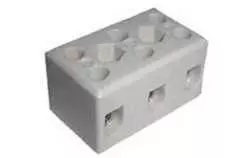
TGP-050-XXJHC Electrical Power Distribution Terminal Blocks
Electrical Power Distribution Blocks (600V, 50A, 2~12 Pin)
MorePower Distribution Terminal Blocks manufacturer. Shining E&E is a high-quality Meet Shining E&E’s Trusted Power Distribution Terminal Block Solutions, terminal block, electrical terminal block, terminal block connector, terminal connector, barrier strip, power terminal block, led terminal block, led connector, fuse holder, fuse block, fuse clip, solid state relay, ssr, insulator, busbar support manufacturer from Taiwan since 1978. SHINING E&E INDUSTRIAL, with more than 40 years of production experience in plastic injection, metal stamping, and electrical components assembly. And provide a wide range of electrical terminal blocks, fuse holders and solid state relays SSR.
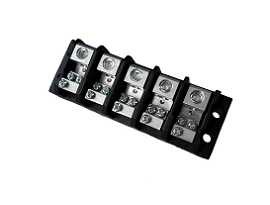
A power distribution terminal block is a type of terminal block used to safely split electrical power from one input source to multiple outputs. It simplifies wiring, reduces clutter, and ensures safe, reliable connections. These blocks typically feature an input terminal for the main power supply and several output terminals for distributing power to different circuits or devices.
By combining strong conductive materials, insulation, and secure terminals, a power distribution block ensures efficient current flow and reduces risks like loose connections or overheating.
With over 40 years of experience, Shining E&E continues to deliver trusted power distribution terminal blocks designed to meet the unique needs of every customer across industries. The TGP Series is the latest addition to our extensive line, offering secure, flexible, and certified solutions for the lightning and HVAC industries worldwide.
Specification | TGP-050-XXJ / XXA | TGP-085-XXJ |
Voltage / Current Rating | 600 V / 50 A | 600 V / 85 A |
Poles Available | 2 to 12 poles | 2 to 8 poles |
Connector Size (Wire Range) | Input: #16–6 AWG (1.3–13 mm²) Output: #20–14 AWG (0.5–2 mm²) | Input: #14–2 AWG (2–33 mm²) Output: #20–12 AWG (0.5–3.3 mm²) |
Installation Type | Panel mount (no DIN rail required) | Panel mount (no DIN rail required) |
Quick Connect / Screw Type | 3/16" Quick Connect Tabs (4 per pole) Hexagon Socket or Slotted Screw | 1/4" Quick Connect Tabs (4 per pole) Hexagon Socket or Slotted Screw |
Certifications & Material | UL / cUL approved, RoHS compliant Housing: PBT, UL 94V-0 flame-retardant, 120 °C | UL / cUL approved, RoHS compliant Housing: PBT, UL 94V-0 flame-retardant, 120 °C |
Dimensions (L×W×H) | [No. of Poles × 17 mm] × 21 mm × 27 mm | [No. of Poles × 20 mm] × 28 mm × 34 mm |
Space-Saving Design: Compact blocks that keep your panels neat while delivering maximum performance.
Built for Growth: Scalable solutions that adapt easily to multiple and expanding system requirements.
Wiring Made Easy: Multiple connection options for hassle-free installation and flexible layouts.
Certified Safety: UL and cUL approvals give you confidence that every connection is secure and compliant.
Engineered to Last: Rugged construction with built-in ribs for extra durability, even in demanding environments.
High-Quality Fasteners: Available with steel or stainless steel screws, in hexagon socket or slotted set screw designs for secure and versatile connections.
Lighting Systems: Efficiently distribute power to multiple lighting circuits.
HVAC Applications: Handle high currents safely in heating, ventilation, and cooling systems.
Industrial Panels: Simplify wiring for complex machinery and control panels.
Commercial Buildings: Reduce clutter and improve safety in power distribution setups.
If you are looking for reliable ladder straps or ladder straps for the roof, we are your trusted partner. Contact us today at hsichin2@ms37.hinet.net and sales@shining.com.tw to request a quote or learn more about our ladder strap solutions.
A power distribution block splits a single power source into multiple outputs, designed for higher current loads and safe power branching. A terminal block mainly serves as a secure connection point to join and organize wires. A power distribution terminal block combines both functions, offering safe power splitting while keeping wiring neat and modular in a terminal block style.
For UL/cUL certified models, each pole (circuit) is approved to handle only one input wire. If certification is not required, each pole can be designed to handle multiple input wires. If you need UL-certified multiple input capability, you would have to apply for an additional UL test, which comes with extra certification costs.
Yes, customization services are available for those who have sufficient order volumes or are willing to cover the costs of product design and mold development. In such cases, the power distribution blocks can be tailored to specific requirements, ensuring that they meet unique project needs.
Yes, samples can be provided before placing a bulk order. Customers may place small-quantity sample orders to verify product specifications and quality. If they provide their courier account and agree to cover the shipping costs, we are glad to send samples for confirmation.
There is no strict minimum order quantity requirement for our products. However, order volume does influence both pricing and lead time. For practical purposes, we recommend customers order in multiples of a full carton, typically 200, 500, or 1,000 pieces, to achieve better efficiency in both cost and delivery.
Simply email your inquiries to hsichin2@ms37.hinet.net and sales@shining.com.tw, providing their company and contact information, the required product models or specifications, the order quantity, and details regarding trade terms and delivery location. This information allows us to prepare accurate quotations and arrange timely production.
Yes, we also support international shipping, and the delivery time varies depending on order size:
Small orders (200–1,000 pcs): 15–20 days
Bulk orders (2,000–20,000 pcs): around 30 days
Large-scale orders (50,000–100,000 pcs): 40–60 days
Always turn off the power before installation. Secure the block on a panel or DIN rail, strip wires to the proper length, and insert them into the correct terminals. Tighten input and output wires to the recommended torque and double-check all connections before restoring power.
When selecting a power distribution block, it’s important to understand its ratings and compatibility with your system. Consider the following factors to ensure the block can safely handle your application without risk of damage or failure.
The voltage rating tells you the maximum voltage the block can handle safely. If this limit is exceeded, it can damage both the block and the connected system. Power distribution blocks are available for many applications, ranging from low-voltage automotive systems at 12V DC to high-voltage industrial systems up to 600V AC. Some specialized models, such as those used in solar inverters, are rated as high as 1500V DC.
The current rating indicates how much current the device can carry without overheating or failing. Automotive applications usually require blocks rated between 30A and 200A, while industrial systems may need ratings up to 600A. For example, our certified models rated up to 600V and either 50A or 85A, making them suitable for a wide range of power distribution needs.
The number of poles determines how many independent circuits a block can support at the same time. You should also check how many line-side connections are available for the power source and how many load-side connections are provided for distributing power.
Connection type also makes a big difference in ease of use and reliability. Screw terminals offer a secure, heavy-duty connection but require careful tightening and can loosen under vibration. Spring-cage terminals clamp wires quickly and maintain tension, making them ideal for environments with frequent vibration. Push-in terminals combine speed and reliability, allowing tool-free installation and reducing wiring time by nearly half compared to screw types.
Wire size and stud size must match the block’s specifications to ensure a safe and efficient connection. Wire gauge defines the safe current-carrying capacity of a conductor. If the wire is too thin for the electrical load, it can overheat, damage the insulation, and even create a fire risk.
Stud size also matters because ring terminals must fit securely onto the stud or screw of the block. If the hole is too large, the connection may loosen; if it’s too small, it simply won’t fit.
Lastly, always ensure the product meets safety standards such as UL, IEC, or CSA. Certified blocks guarantee proper clearances, creepage distances, and fault protection. Using certified products not only ensures compliance with regulations but also gives peace of mind that the system is built on reliable and safe components.
Power distribution blocks are widely used to simplify wiring, reduce clutter, and improve system reliability. However, like any electrical device, they can develop problems if not installed or maintained properly. Below are some of the most common issues you may encounter and what they mean for your system.
Overheating often happens when too much current flows through the block or when connections are loose and poorly made. If ignored, this can damage both the block and nearby components. Electrical faults such as short circuits or ground faults should also be investigated immediately to avoid safety hazards.
Loose connections can reduce conductivity, causing voltage drops, increased resistance, and even circuit interruptions. Over time, this can also generate heat, leading to further risks. Regularly tightening connections and using proper terminal blocks or locking hardware helps maintain safe and reliable performance.
When fuses blow or circuits trip, it’s often a sign of overload or a short circuit. Simply replacing the fuse is not enough. You need to confirm that the block’s current rating matches the system’s load. Replacing blown fuses with the correct rating and fixing the root cause ensures your system continues to operate safely.
Power distribution blocks are built from several key parts that work together to distribute electricity safely and efficiently.
Terminals are the connection points where wires are attached. A PDB usually has one input terminal for the main power supply and multiple output terminals to feed power to different circuits or devices. These terminals can use different connection methods, such as screws, spring-cage clamps, push-in types, or threaded studs. The number of poles tells you how many separate circuits the block can handle at once.
The conductive elements inside the block are usually made of copper or aluminum, each suited for different needs. Copper offers superior conductivity and is ideal for heavy-duty or industrial applications where high current must be handled safely. Aluminum, on the other hand, is lighter and more economical, making it a practical option for standard electrical distribution where the demand is less intense.
To keep the system safe, the conductive parts are surrounded by insulation. The housing of the block is usually made from strong, non-conductive materials like high-grade plastic, thermoplastic, or sometimes ceramic. Insulation prevents short circuits, keeps live parts separated, and ensures safe operation even in tight spaces.
Some power distribution blocks include built-in protection, such as fuses or circuit breakers. These fused PDBs help protect downstream circuits from overcurrent and are often used in industrial machinery and process control systems. Non-fused PDBs, on the other hand, simply split the power without extra protection. Fuses provide quick protection and take up less space, while circuit breakers can be reset and often combine magnetic and thermal protection. Adding these features makes troubleshooting easier and reduces the risk of serious faults.
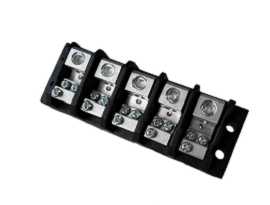
Electrical Power Distribution Blocks (600V, 50A, 2~12 Pin)
More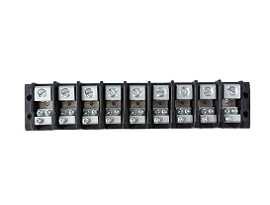
Electrical Power Distribution Blocks (600V, 50A, 2~12 Pin)
More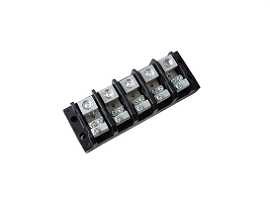
Electrical Power Distribution Blocks (600V, 85A, 2~8 Pin)
More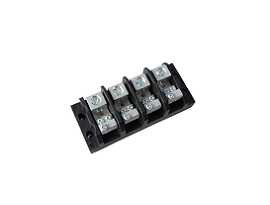
Electrical Power Distribution Blocks (600V, 85A, 2~8 Pin)
More