

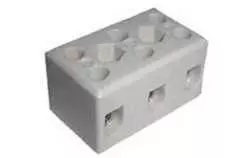
Q: What are the proper Torque Values for Terminal Blocks?
A: The torque depends on the type and size of screw/hardware used in the terminal block. Torque values can be found on our spec sheet in our website

Q: How to find Accessories for the TA Series Terminal Block?
A: Use this link to our online catalog for the TA Series Terminal Block and click on the Accessary link to view listed Accessories. TA terminal block
Q: Do you have any covers for your Terminal Blocks?
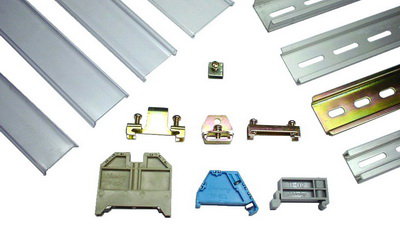
A: Yes, most of our Terminal Blocks can be assembled with covers, and these Terminal Blocks usually come with a transparent cover per set. If needed, protective covers can be optional for the alternative of transparent cover.

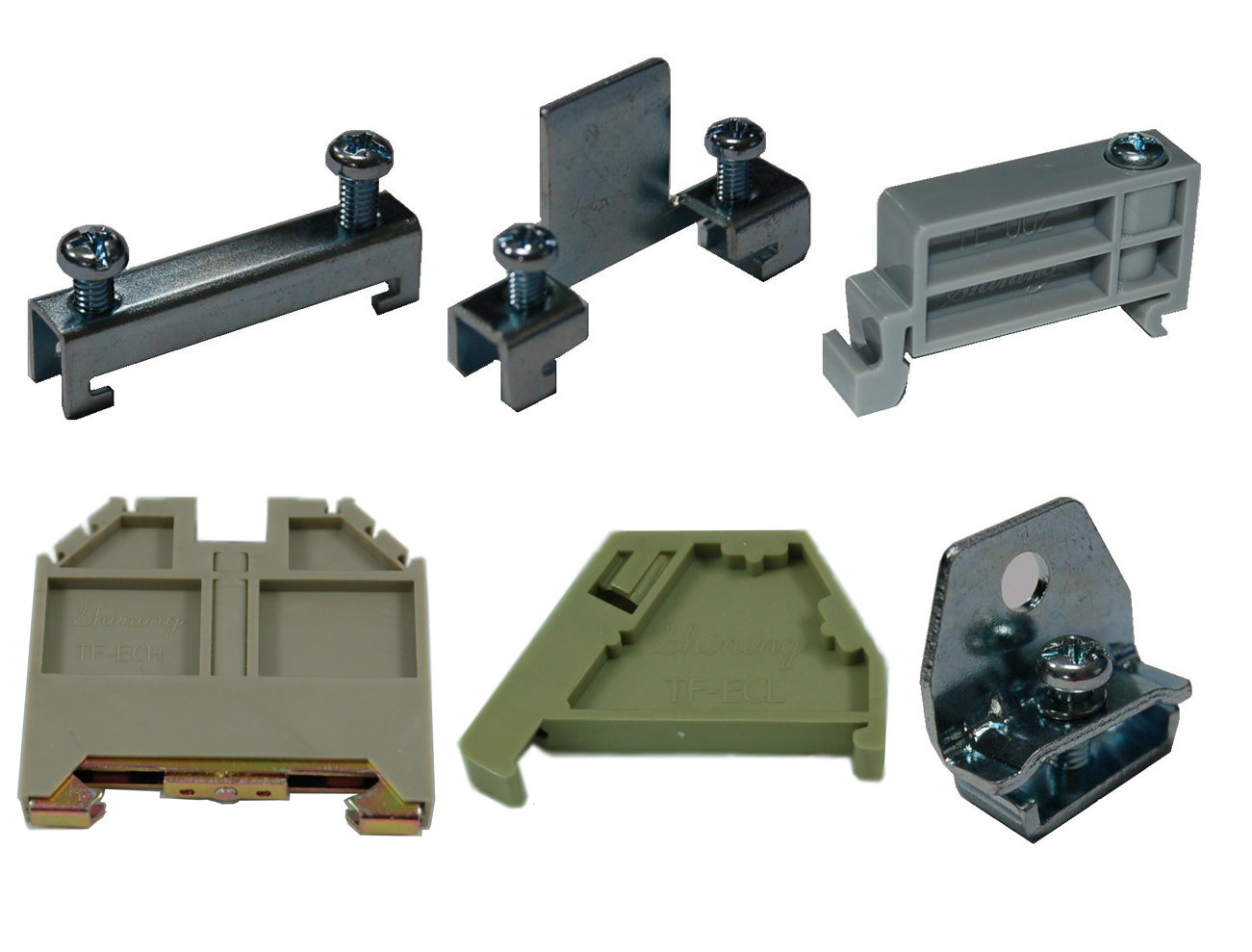
Q: Which kind of End Clamp should I use with my Terminal Blocks?
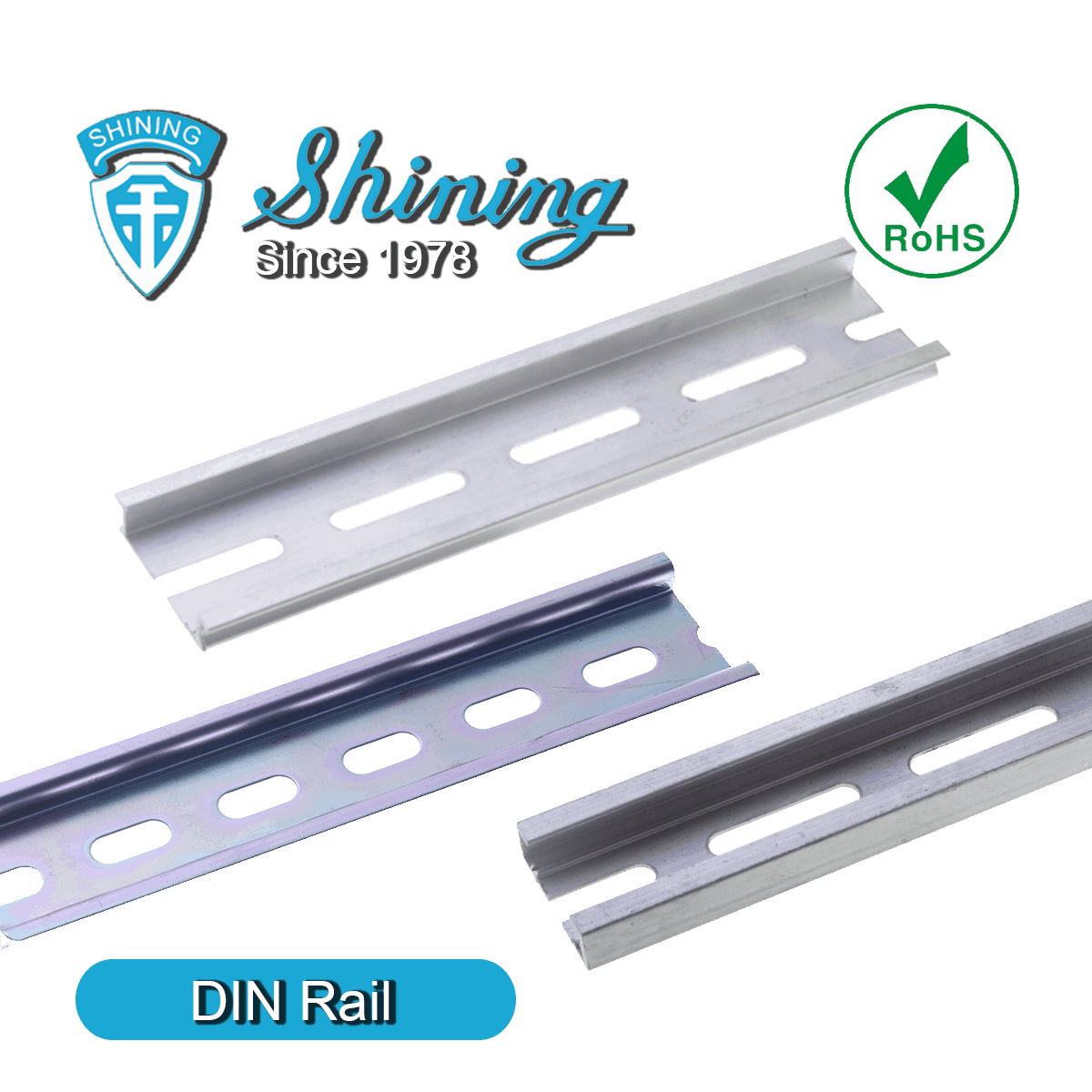
A: It depends on the width of the Din Rail you are using, and the material and type of the End Clamps you prefer. For more information: http://www.shining.com.tw/1EN/ENaccessories_end_clamp_bracket.htm

Q: How long is the lead time after placing the order?
A: Lead time depends on a number of factors, such as the stock and production status. Usually the sample orders take about 2~3 business days, and the mass orders take about 7~14 business days after the order is placed.
Q: How long is SHINING’s “Lead Time”?
A: Usually, the lead time for sample order would be 2~3 days after receiving your sample fee. For bulk order, the lead time would be 7~14 days.However, we need to double check our stock and production line.


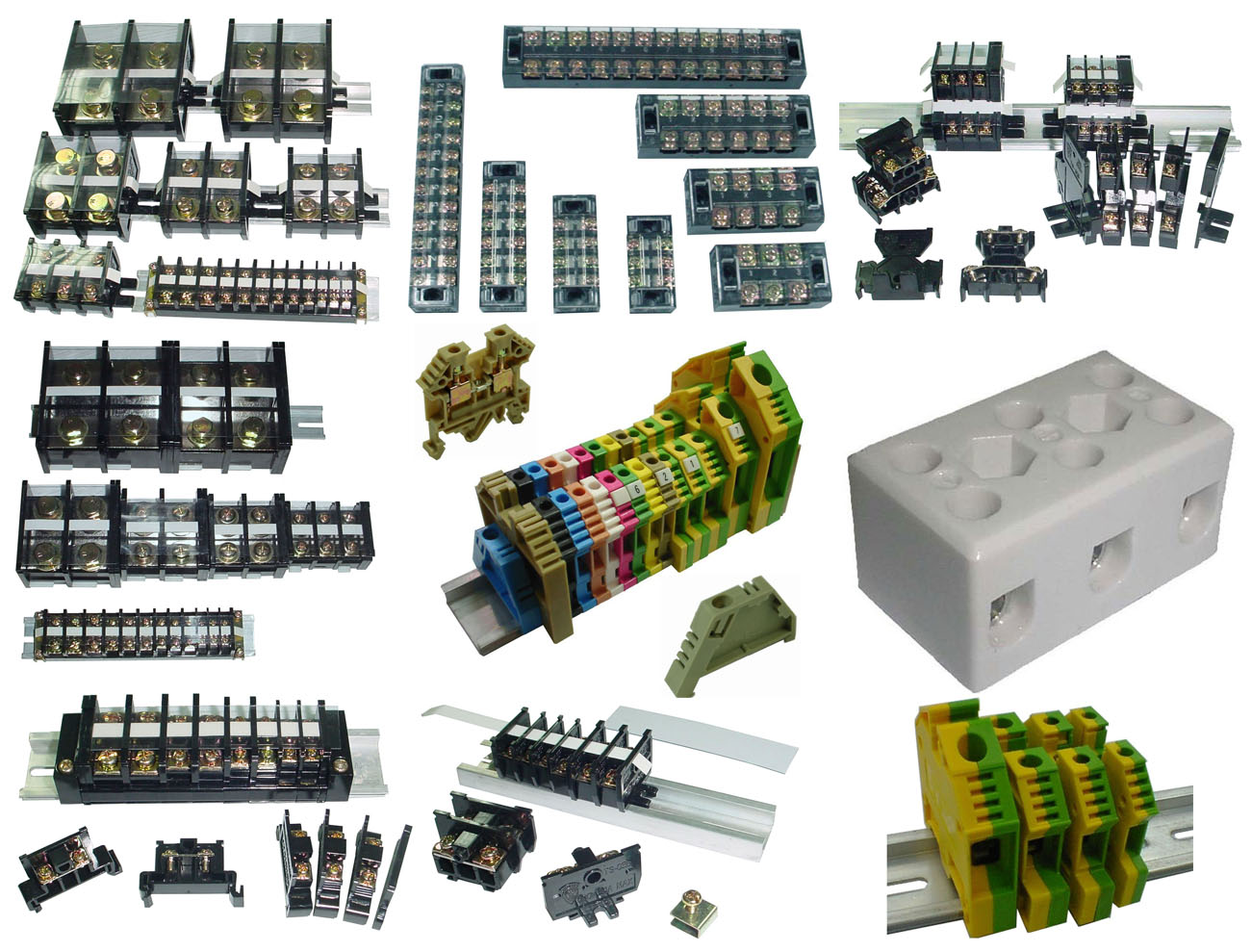
The Terminal Strip is a connector which allows more than one circuit to connect to another circuit. A terminal block is consists of Plastic Parts and Metal Hardware Parts. In other words, it includes Terminal Block Housing (Plastic Parts), Conductor and the Screw (Metal Parts).

The material of conductor is brass, aluminum or other metal, and finished with nickel, tin or other material. With the conductor, the different wires can conduct each other.
 |
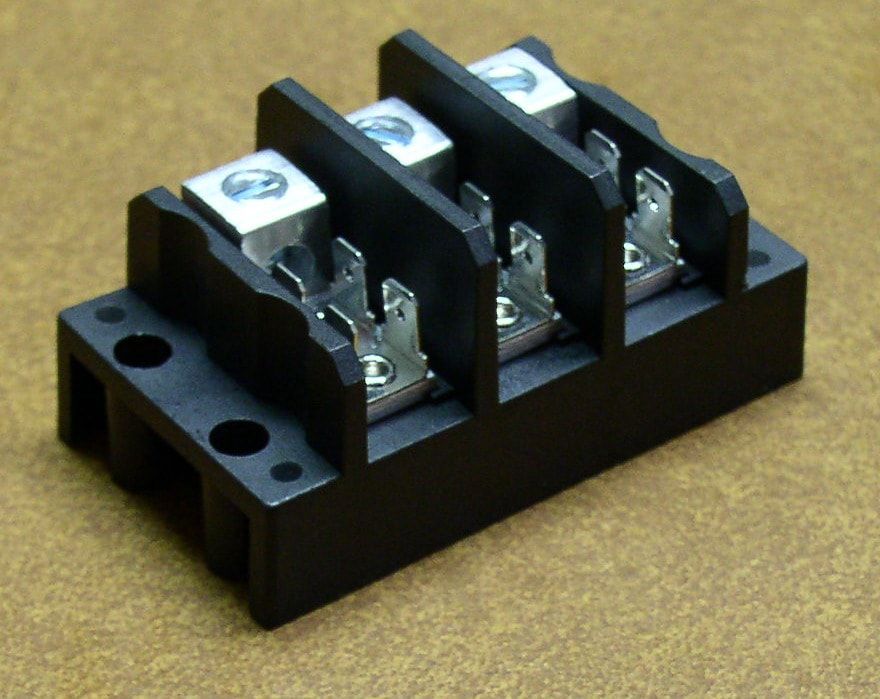
TGP-085-03A1 screw to Tab type |
The function of a screw is to fasten the wires. Also, the screw is also an electric conductor, which can connect the wire and conductor. Please note, you need to tighten the screw well when you use the terminal block. Otherwise, the wires would loose, and it may let your terminal block superheating and broken then damage your machine.
If you search the Terminal Block on the Internet, you may find that there are many Screw to Screw types. However, we also manufacture Screw to Tab, Screw to Stud and Stud to Stud type. You can visit our website and get more information about our TGP series terminal block connector:https://www.terminalsblocks.com/en/category/Terminal-Blocks/Terminal_Blocks.html


Are you curious about fuse blocks and what they do? Wondering how to properly install and troubleshoot them? In this article, we'll explain everything you need to know about fuse blocks. From their function and components to wiring and common issues, we've got you covered.
So, whether you're a DIY enthusiast or just want to learn more, read on to discover the INs and OUTs of fuse blocks. Contact SHINING right now please feel free to contact us, and we will reply as soon as possible.
The Function of a Fuse Block
A Fuse Block is a simple yet effective way to safeguard your electrical system from potential hazards. You'll be amazed at how a fuse block functions in your electrical system. This small device plays a crucial role in protecting your electrical circuits from overloading and short circuits.
The fuse block is essentially a junction box that contains multiple fuses, each connected to a specific circuit. When an electrical overload or short circuit occurs, the fuse in that circuit will blow, interrupting the flow of electricity and preventing any further damage.
This is because the fuse is designed to melt when it detects excessive current, breaking the circuit and cutting off the power supply. Once the faulty circuit is repaired, you simply need to replace the blown fuse with a new one to restore power.
Components of a Fuse Block
| Material | function | Installation | |
| fuse holder | Non-conductive material (ex: plastic、ceramic) | To ensure that the electrical current is properly directed | Holds the fuse in the main place |
| fuse clips | Conductive material (ex: brass 、copper) | To allow for the flow of electrical current | Securely holding the fuse in place within the fuse holder |
| cover | Durable material (ex: plastic) | Prevents any accidental contact with the fuse | Provide protection to fuse block |
Understanding Fuse Block Wiring
To properly understand fuse block wiring, you'll need to grasp the basic components and their functions. Once you have identified the fuse block, which houses the fuses and relays, you can start examining the wiring.
- It's crucial to ensure that the wiring is properly connected and secured to prevent any electrical malfunctions.
- The wiring is color-coded, making it easier to identify and troubleshoot any issues.
- Each fuse in the block is responsible for protecting a specific circuit from overloading or short-circuiting.
The wiring in a fuse block connects the electrical components in a circuit to the power source and allows for the flow of electricity. Understanding fuse block wiring is essential for maintaining a safe and functional electrical system in your vehicle or any other application.
Importance of Proper Fuse Block Installation
Properly installing the fuse block is crucial for ensuring the safe and efficient operation of your electrical system. When the fuse block is installed correctly. This helps to avoid damage to :
- Preventing excessive current flow in the event of a fault or overload
- Avoid damage to your system and potential hazards such as electrical fires
- Reducing the risk of loose connections causing electrical arcing or intermittent power issues
- Proper installation ensures that the fuse block is securely mounted and connections are tight
- Help to maintain the reliability and longevity of your electrical system
It's important to follow the manufacturer's instructions and guidelines when installing the fuse block, as improper installation can lead to malfunctions and safety risks. Contact SHINING right now! Please feel free to contact us, and we will reply as soon as possible.
Troubleshooting Common Fuse Block Issues
| Blown fuses | A common issue with fuse blocks is blown fuses. When a fuse blows, it interrupts the flow of electricity to the circuit it protects, causing the corresponding component to stop working. To troubleshoot this problem, you can visually inspect the fuse block and look for any blown fuses. If you find a blown fuse, you can easily replace it with a new one of the same amperage rating. |
| Loose or corroded connections | Another common issue is loose or corroded connections in the fuse block. This can cause intermittent electrical problems or complete loss of power to certain components. To fix this problem, you can tighten any loose connections or clean any corrosion using a wire brush or contact cleaner. |
Frequently Asked Questions
Can a Fuse Block Be Used for Both AC and DC Circuits?
Yes, a fuse block can be used for both AC and DC circuits.
It provides protection by interrupting the flow of current when there's an overload or short circuit, preventing damage to your electrical system.
How Do You Choose the Appropriate Fuse Rating for a Fuse Block?
Make sure the fuse rating is slightly higher than the circuit's maximum current.
To choose the appropriate fuse rating for a fuse block, you need to consider the current requirements of the circuit.
Can a Fuse Block Be Used for High-Powered Appliances or Equipment?
Yes, a fuse block can be used for high-powered appliances or equipment.
It helps protect them by preventing excessive current flow and acts as a safety mechanism in case of electrical faults.
Are Fuse Blocks Weatherproof or Suitable for Outdoor Installations?
Yes, fuse blocks can be weatherproof and suitable for outdoor installations.
They're designed to protect electrical circuits from overloads and short circuits. This makes them a reliable choice for outdoor use.
Can Multiple Fuse Blocks Be Connected Together to Manage a Larger Number of Circuits?
Yes, you can connect multiple fuse blocks together to manage a larger number of circuits.
This allows for a more efficient and organized distribution of power throughout your electrical system.
Conclusion
In conclusion, a fuse block is an essential component in electrical systems as it helps protect circuits from overloading and short circuits. It consists of various components, such as fuses, terminals, and wiring, that work together to ensure the safe operation of electrical devices.
Proper installation and understanding of fuse block wiring are crucial to avoid potential issues. If any problems arise, troubleshooting common fuse block issues can help identify and resolve them effectively.
Contact SHINING right now! Please feel free to contact us, and we will reply as soon as possible.

If you've ever wondered what solid state relays (SSR) are and how they work, this article has got you covered. We'll delve into the basics of SSR and explore their advantages over electromechanical relays.
Whether you're looking to understand their applications or choose the right SSR for your needs, this article will provide you with the essential information you need.
So, let's get started and demystify the world of solid state relays.Our engineers are ready to discuss your project with you contact SHINING right now!!
The Basics of Solid State Relays (SSR)
SSRs are commonly used in applications where fast switching, high reliability, and noise immunity are required, such as industrial automation, power distribution systems, and HVAC controls.
To understand the basics of SSRs, you need to know how they work and what their main components are.
| Control circuit | Switching device |
| Receives the input signal and activates the switching device | Controls the flow of current through the load |
Solid State Relays, or SSRs, are electronic switches that use semiconductor devices to control the flow of current. Unlike traditional electromechanical relays, SSRs don't have any moving parts. Instead, they use optocouplers or power transistors to turn on or off the flow of electricity.
How Solid State Relays (SSR) Work
- control the flow of current
Solid state relays (SSRs) work by using semiconductor devices and electronic components to control the flow of current. Unlike traditional electromechanical relays that use mechanical contacts to switch the current, SSRs utilize solid-state components such as thyristors or transistors.
- input signal is applied
When an input signal is applied to the control circuit of the SSR, the semiconductor device is triggered and allows current to flow through the output circuit. This allows SSRs to provide fast and reliable switching without the need for moving parts, resulting in longer lifespans and improved performance.
Additionally, SSRs offer advantages such as silent operation, reduced arcing, and enhanced resistance to shock and vibration. These features make SSRs suitable for a wide range of applications, including industrial automation, power distribution, and motor control.
Advantages of Solid State Relays (Ssr) Over Electromechanical Relays
You'll appreciate the numerous advantages of SSRs over electromechanical relays.
| Feature | Solid State Relays (SSR) | Electromechanical Relays |
|---|---|---|
| Operating Principle | Based on semiconductor components, no mechanical moving parts | Operates using electromagnetic coils and mechanical contacts |
| Switching Speed | Microseconds or milliseconds | Milliseconds or longer |
| Service Life | Generally rated for millions of switching cycles | Limited lifespan, typically rated for thousands of switching cycles |
| Weight | Light, compact | Heavier, larger |
| Power Consumption and Heat Generation | Low power consumption, minimal heat generation | Higher power consumption, generates more heat |
| Silent Operation | Noiseless operation | May have contact bounce or noise |
| Vibration and Shock Resistance | Resistant to vibration and shock | Less resistant to vibration and shock |
| Current Types Supported | Available for both AC and DC applications | Available for both AC and DC applications |
| Moisture and Dust Resistance | Good moisture and dust resistance | Lower moisture and dust resistance |
Applications of Solid State Relays (SSR)
You can find SSRs used in a wide range of applications, including industrial automation, HVAC systems, and medical equipment.
- In industrial automation, SSRs are used for controlling motors, pumps, and other electrical loads. They provide fast and reliable switching, reducing the risk of damage to sensitive equipment.
- HVAC systems, where they control the heating, ventilation, and air conditioning units. They offer precise temperature control and help to optimize energy efficiency.
- In medical equipment, SSRs are used for controlling various devices such as surgical instruments, diagnostic equipment, and patient monitoring systems. Their compact size, low noise, and high reliability make them ideal for medical applications.
Choosing the Right Solid State Relay (SSR) for Your Needs
- Define Your Requirements: Begin by assessing your voltage and current requirements, as well as the type of load you will be controlling.
- Input Control Voltage and Current: Consider the input control voltage and current, as well as the output switching voltage and current capabilities of the SSR. Choose an SSR that can handle the maximum voltage and current levels of your application to ensure safe and efficient operation.
- Switching Speed and Response Time: Take into account the switching speed and response time of the SSR, as it can impact the overall system performance.
- Built-In Protection Features: Look for SSRs with built-in protection features such as overvoltage protection, short-circuit protection, and thermal protection to safeguard against potential damage.
- Size and Mounting Options: Finally, consider the size and mounting options of the SSR to ensure it can be easily integrated into your system.
These key points can assist you in choosing an SSR that aligns with your specific requirements and offers reliable performance.Contact SHINING right now!!
Frequently Asked Questions
Can Solid State Relays Be Used in Hazardous Environments?
Yes, solid state relays can be used in hazardous environments.
They have no moving parts, which reduces the risk of sparks or fires.Additionally, they are more resistant to shock and vibration.
What Are the Common Failure Modes of Solid State Relays?
Common failure modes of solid state relays include:
- Short-circuiting
- Overheating
- Voltage spikes
These issues can lead to:
- Malfunctions
- Damage to connected devices
- Potential safety hazards
Regular monitoring and maintenance are crucial to prevent these failures.
Can Solid State Relays Replace Electromechanical Relays in All Applications?
Solid state relays (SSRs) can replace electromechanical relays in many applications.
They offer several advantages, such as faster switching speeds, longer lifespan, and reduced noise.However, it's crucial to consider the specific requirements of your application before making the switch.
Are Solid State Relays More Expensive Than Electromechanical Relays?
Solid state relays can be more expensive than electromechanical relays.
However, they offer benefits such as faster switching speeds and longer lifespan.It is important to consider your specific application and budget when choosing between the two.
How Do You Determine the Appropriate Heat Sink Requirement for a Solid State Relay?
To determine the appropriate heat sink requirement for a solid state relay, you need to consider factors like:
- The maximum current
- The ambient temperature
- The thermal resistance of the relay.
These factors are crucial because they directly impact the amount of heat that the relay will generate during operation. By properly evaluating these factors, you can calculate the heat sink requirement that will effectively dissipate the heat and prevent the relay from overheating.
Firstly, you need to determine the maximum current that the relay will handle. This information is usually provided in the relay's datasheet. The higher the current, the more heat the relay will generate.
Next, you need to consider the ambient temperature in which the relay will operate. This is the temperature of the surrounding environment. Higher ambient temperatures will increase the heat load on the relay, requiring a more efficient heat sink.
Finally, you need to take into account the thermal resistance of the relay. This is a measure of how easily heat can flow from the relay to the surrounding environment. A lower thermal resistance value indicates better heat dissipation.
Once you have gathered all these factors, you can use them to calculate the heat sink requirement. This requirement is usually expressed as a thermal resistance value, indicating the maximum allowable temperature rise above the ambient temperature.
Conclusion
So there you have it - solid state relays (SSRs) are a reliable and efficient alternative to electromechanical relays. They work by using semiconductor technology to switch electrical currents, offering several advantages such as faster response times and longer lifespan.
SSRs find applications in various industries and can be chosen based on specific needs. Consider using SSRs for your electrical switching needs to enjoy their benefits and improve your system's performance.Contact SHINING right now!!
Reference
- What Is Solid State Relays(SSR)?: https://blog.shiningtw.com/terminal-blocks/48/
Image Source: Unsplash
Overview
In electrical installations, it's essential to choose the amp rating of a terminal block carefully. This rating plays a critical role in guaranteeing the safe and effective performance of your electrical system. Terminal blocks connect multiple wires, facilitating convenient and orderly connections. They establish secure and dependable links, preventing the risk of loose or exposed wires that might cause electrical dangers. Nevertheless, if the amp rating of the terminal block isn't suitable for the current it handles, it can lead to problems such as overheating, wire damage, and even the potential for fires.
Understanding Amp Rating
When it comes to electrical systems, understanding the amp rating of a terminal block is crucial. The amp rating refers to the maximum amount of current that a terminal block can safely handle without overheating or causing damage. It is an important factor to consider when selecting a terminal block for any electrical application.
What is Amp Rating?
The amp rating is a measure of the current-carrying capacity of a terminal block. It indicates the maximum amount of electrical current that can flow through the terminal block without exceeding its temperature limits. The higher the amp rating, the more current the terminal block can handle.
In electrical systems, different devices and components require specific amounts of current to operate efficiently and safely. Therefore, it is essential to choose a terminal block with an appropriate amp rating that matches the requirements of the connected devices.
How Current Relates to Amp Rating
| Current and terminal blocks | The selection of an appropriate amp rating for a terminal block depends on the amount of current flowing through it. Current is measured in amperes (A) and represents the rate at which electric charge flows through a circuit. The higher the current, the greater the demand on the terminal block. |
| current expected in your electrical system | To ensure proper functioning and prevent overheating or damage, it is crucial to choose a terminal block with an amp rating that exceeds or matches the maximum current expected in your electrical system. Failure to do so can lead to issues such as voltage drops, excessive heat generation, and even component failure. |
| current relates to amp rating | Think of current as water flowing through a pipe. The pipe's diameter represents the amp rating – wider pipes allow more water (current) to flow smoothly without restrictions or pressure build-up. Similarly, choosing a terminal block with a sufficient amp rating ensures that there are no bottlenecks or limitations on current flow within your electrical system. |
| safety and efficiency of your electrical system | It's important to note that exceeding a terminal block's amp rating can have severe consequences. Overloading a terminal block with excessive current can cause it to overheat, melt insulation, and potentially lead to electrical fires or equipment failure. Therefore, selecting the correct amp rating is crucial for maintaining the safety and efficiency of your electrical system. |
Notices
When choosing the amp rating for a terminal block, there are several factors that need to be taken into consideration:
| Maximum current | This can be determined by calculating the total current drawn by all connected devices or by referring to the specifications provided by manufacturers. It is important to note that exceeding the maximum amp rating of a terminal block can lead to overheating and potential damage. |
| Ambient temperature | High temperatures can affect the performance of a terminal block and may require a higher amp rating to compensate for increased heat dissipation. Additionally, if there are any voltage spikes or surges in your electrical system, it is important to choose a terminal block with an appropriate amp rating that can handle these fluctuations without causing any damage. |
| Future expansions | If you anticipate any changes in your load requirements, it is advisable to choose a terminal block with a higher amp rating than what is currently needed. This will allow for flexibility and prevent the need for replacing or upgrading the terminal block in the future. |
| Additional considerations | It's worth noting that selecting an overly high amp rating for your terminal block can also have drawbacks. Larger terminals blocks with higher ratings tend to be physically larger in size, which may not be suitable for certain space-constrained installations. Additionally, higher amp ratings may come at a higher cost, so it is important to strike a balance between the required amp rating and practicality. |
Factors to Consider
When it comes to choosing the right amp rating for a terminal block, there are several factors that need to be considered. These factors include voltage and current requirements, temperature considerations, wire size, and gauge. By taking these factors into account, you can ensure that you select the appropriate amp rating for your specific application. Our engineers are ready to discuss your project with you contact SHINING right now!!
Voltage and Current Requirements
One of the most important factors to consider when selecting the amp rating for a terminal block is the voltage and current requirements of your electrical system. The amp rating represents the maximum amount of current that a terminal block can safely handle without overheating or causing damage.
Maximum current that will flow through the terminal block in your system. This can be determined by calculating the total current draw of all connected devices or by consulting the specifications provided by your equipment manufacturer.
At the same time, It's crucial to choose a terminal block with an amp rating that exceeds the maximum current draw in order to prevent overheating. Selecting a terminal block with too low of an amp rating can lead to excessive heat buildup, which can cause damage to both the terminal block and connected devices. Shining is a professional Terminal Block Manufacturer in Taiwan, with full of experience.
Temperature Considerations
Another important factor to consider when choosing an amp rating for a terminal block is temperature. The operating temperature range of a terminal block plays a significant role in determining its ability to handle current safely.
When selecting a terminal block, it's essential to consider both ambient temperature (the temperature of the environment where it will be installed) and internal temperature (the temperature generated by current flowing through the terminals). Excessive heat can cause degradation of insulation materials and increase resistance, leading to potential failures or even fire hazards.
To ensure safe operation, it's recommended to choose a terminal block with an amp rating that is suitable for your specific operating temperature range. Manufacturers typically provide guidelines on how their products perform under different temperatures, so make sure to consult these specifications before making a decision.
Wire Size and Gauge
The size of the wire refers to its diameter, while the gauge represents the thickness of the wire. The wire size and gauge also play a crucial role in determining the appropriate amp rating for a terminal block.
As current flows through a wire, it encounters resistance, which generates heat. If the wire is too thin or has insufficient gauge, it may not be able to handle the current without overheating. This can lead to voltage drops, reduced efficiency, and potential damage to both the wire and terminal block.
When selecting an amp rating for a terminal block, it's important to ensure that it matches or exceeds the maximum current capacity of the wire being used. Choosing a terminal block with an insufficient amp rating can result in overheating and potential failure of both the wire and terminal block.
Additionally, it's essential to consider any future expansions or modifications to your electrical system that may require larger wires. By choosing a terminal block with a higher amp rating than your current requirements, you can accommodate future changes without needing to replace the entire terminal block.
Common Mistakes to Avoid
When it comes to choosing the right amp rating for a terminal block, there are several common mistakes that people often make. These mistakes can lead to various issues, including electrical failures and safety hazards. To ensure the optimal performance and safety of your electrical connections, it is important to avoid these common pitfalls. Our engineers are ready to discuss your project with you, contact SHINING right now!!
Underestimating Current Requirements
To avoid this mistake, it is crucial to accurately determine the required amp rating for your terminal block. This involves calculating the total current that will be passing through the terminal block by considering all connected devices and their respective current ratings. It is recommended to consult with an electrical engineer or refer to relevant specifications and guidelines provided by manufacturers.
- overheating
- melting of insulation
- fire hazards
Ignoring Temperature Considerations
Another common mistake is ignoring temperature considerations when selecting the amp rating for a terminal block. The amp rating of a terminal block is typically specified at a certain temperature, usually 20°C (68°F). However, as current flows through a terminal block, it generates heat due to resistance in wires and connections. This heat can cause an increase in temperature within the terminal block itself. By properly assessing these temperature conditions, you can select a suitable amp rating that can handle both normal operating currents and any potential temperature rise.
Ignoring temperature considerations can lead to overheating and premature failure of the terminal block. It is important to account for this heat generation by considering factors such as :
- ambient temperature
- ventilation
- proximity to other heat sources
- enclosed spaces
Neglecting Wire Size and Gauge
If the wire size is too small or the gauge is not appropriate for the intended current, it can lead to :
- potential overheating
- voltage drop
- excessive resistance
By avoiding these common mistakes, you can ensure that you choose the right amp rating for your terminal block. Taking into account accurate current requirements, temperature considerations, and appropriate wire size and gauge will help prevent issues such as overheating, electrical failures, and safety hazards. This involves considering factors such as conductor material, insulation type, length of wire, and permissible voltage drop. It is recommended to consult electrical codes and standards or seek guidance from professionals to ensure compliance and safety.
Choosing the Right Amp Rating
Shining is a professional Terminal Block Manufacturer in Taiwan, with full of experience. We will follow the guidelines to select the right ampere rating for your specific application
1. current requirements of your electrical circuit: When choosing an amp rating is the current requirements of your electrical circuit, you need to determine the maximum current that will flow through the terminal block. This can be done by calculating the total current draw of all connected devices or by referring to the specifications provided by the manufacturer
2. temperature rise of the terminal block: As current flows through a conductor, it generates heat due to resistance. If the current exceeds the amp rating of the terminal block, it can cause excessive heat buildup and potentially lead to overheating or even melting of the components. Therefore, it is crucial to choose an amp rating that can handle the expected current without exceeding its temperature limits.
3. consider any future expansion: In addition to current requirements and temperature rise, you should also consider any future expansion or changes in your electrical system. It is always wise to choose a terminal block with a slightly higher amp rating than what is currently required. This allows for flexibility and ensures that you won't have to replace or upgrade your terminal block if your needs change in the future.
4. specific load requirements: It's important to note that different types of loads may have different amp rating requirements. For example, resistive loads typically have lower amp ratings compared to inductive or capacitive loads due to their power factor characteristics. Make sure you understand your specific load requirements and choose an amp rating accordingly.
5. terminal block specifications and guidelines: While larger terminal blocks may generally have higher amp ratings, this is not always true across all manufacturers and models. Always refer to the manufacturer's specifications and guidelines for accurate information on amp ratings.
By carefully considering the current requirements, temperature rise, future expansion, load characteristics, and manufacturer specifications, you can confidently choose the right amp rating for your terminal block. This ensures the safe and reliable operation of your electrical system while minimizing the risk of overheating or other potential issues. Remember to consult with a qualified electrical engineer or professional if you have any doubts or concerns during the selection process. Contact SHINING right now!! If you have any questions or requirements, please free to contact us, and we will reply as soon as possible.
Conclusion
In conclusion, selecting the correct amp rating for a terminal block is crucial to ensure the safe and efficient operation of electrical systems. By understanding the relationship between current and amp rating, you can make informed decisions when choosing the right amp rating for your terminal block. Factors such as the maximum current load, temperature rise, and voltage drop should be carefully considered to prevent any potential issues or hazards.
In summary, selecting the correct amp rating for a terminal block requires careful consideration of various factors and adherence to industry standards. By choosing an appropriate amp rating, you can optimize the performance and safety of your electrical systems. Contact SHINING right now!! If you have any questions or requirements, please free to contact us, and we will reply as soon as possible.