

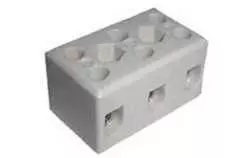
Screw vs Push-in Terminal Blocks
Use screw-clamp blocks for high vibration, large conductors and field-serviced wiring; use push-in for fast assembly with solid wire or ferrules. Push-in saves labor and never needs re-torque; screw gives maximum clamp force, easy visual inspection and handles the largest wires.
Full comparison
| Criterion | Screw clamp | Push-in |
|---|---|---|
| Assembly speed | slower (torque each) | fast (insert) |
| Labor | higher | lower (industry reports ~50% less*) |
| Vibration | excellent (if torqued) | very good (constant spring force) |
| Best wire | solid & stranded, incl. large | solid / stranded with ferrule |
| Large wire (> 6 mm²) | preferred | limited |
| Re-termination | easy | easy (release tab) |
| Visual inspection / re-torque | yes | not needed (maintenance-free) |
*Labor-saving figures are general industry findings (e.g. published push-in studies), not a Shining measurement.
The ferrule rule
Push-in loves solid wire. For stranded wire, crimp on a ferrule first so the strands enter as one stiff pin — skipping the ferrule is the most common push-in mistake. Factor the ferrule and crimp tool into your cost when comparing.
When screw still wins
For large conductors (> 6 mm²), very high pull-out demands, or processes that require a visible, re-torquable joint, screw is the safer pick.
Regional preference (a real factor)
North American maintenance culture often prefers screw (you can see and re-torque it); much of Europe has moved to push-in for speed and maintenance-free service. Match the habit of the people who will service the panel, not just the spec sheet.
Failure mode: why torque and flame rating matter
The most common terminal-block failure is a loose connection: as clamping force drops, contact resistance rises, the joint heats locally, the metal oxidizes, resistance climbs further — a thermal runaway that can scorch the block or start a fire. Two defenses: tighten screws to the specified torque (and re-torque on a maintenance schedule), and specify housings rated UL94 V-0 so the body resists ignition and self-extinguishes. Push-in and spring designs remove the torque variable entirely by holding a constant spring force.
The manufacturer's angle
Because our screw and push-in variants can share the same footprint and pitch, you can offer both to your customers without redesigning the panel — and switch later if labor or field-service needs change. Many series are UL Recognized Components (UL & cUL), File E257927, with UL94 V-0 housings.
Samples & quotes: small samples are free of charge when you provide your courier account and cover the freight; or pay a sample fee that we credit toward your deposit on the production order. Quotes valid 30 days. MOQ from 50 / 100 / 200 pcs (negotiable).
FAQ
Do push-in terminal blocks need ferrules for stranded wire?
Yes — crimp a ferrule on stranded wire so it inserts as one stiff pin. Solid wire can go in directly.
Are push-in connections reliable in high vibration?
Yes for solid wire or ferruled stranded wire; the spring holds constant force without re-torque. For very large stranded conductors, screw is preferred.
Do push-in terminals loosen over time like screws?
No — there is no screw to back off; the spring maintains force, which is why push-in is considered maintenance-free.
Is screw or push-in better for large wire (above 6 mm²)?
Screw — it delivers higher clamp force and pull-out resistance on large conductors; push-in is best at smaller sizes.
Why do push-in terminals cost more than screw?
Higher part cost, but lower installed cost: insertion is much faster, so labor savings often offset the price in volume builds.